This I beheld, or dreamed it in a dream—
There spread a cloud of dust along a plain;
And underneath the cloud, or in it, raged
A furious battle, and men yelled, and swords
Shocked upon swords and shields. A prince’s banner
Wavered, then staggered backward, hemmed by foes.
A craven hung along the battle’s edge,
And thought, “Had I a sword of keener steel—
That blue blade that the king’s son bears, — but this
Blunt thing—!” he snapped and flung it from his hand,
And lowering crept away and left the field.
Then came the king’s son, wounded, sore bestead,
And weaponless, and saw the broken sword,
Hilt-buried in the dry and trodden sand,
And ran and snatched it, and with battle shout
Lifted afresh he hewed his enemy down,
And saved a great cause that heroic day.
Paraphrase
I saw this—or perhaps dreamed it: a dust cloud spread across a plain, and within it raged a furious battle. Swords smashed against each other and crashed against shields. The prince’s banner began to fall as his forces were hemmed in by enemies.
A coward crept along the edge of the battlefield and thought, “If only I had a sword as sharp as the one the king’s son carries, I could be useful in the battle. But all I have is this blunt weapon!” Then he snapped the sword in half and threw it into the sand. The coward crept away from the battle.
Then the wounded, weaponless king’s son came upon the spot. He saw the coward’s broken sword lying in the sand. He ran to it, seized the hilt, gave a shout, and reentered the battle. He cut his enemies down and saved a great cause that day.
Thoughts
When I discovered this poem, I spent a day teaching it to students in grades 2–5. The poem’s idea spread quickly from classroom to classroom. Even junior high students were discussing the poem after hearing about it from their younger siblings. Soon, parents were telling me about the “opportunities” their children had noticed during the day. Every dinner table seemed to be surrounded by stories about opportunities. One child even lectured his family about opportunities, circling the dinner table as he praised his big sister for deleting TikTok after she noticed how obsessed her friends had become with the app. He lauded her decision and called it “princely,” since she took what was a weakness for her friends (real life) and made it her strength. Because of this poem, a third-grade boy identified “real life” as a weakness of teenagers–and praised his sister’s ready embrace of it.
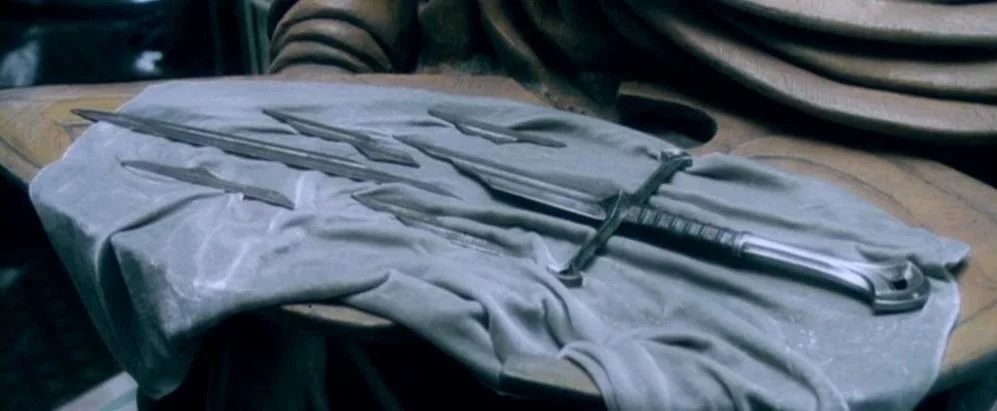
Sill’s lesson reverberates through stories far from his battlefield—victory belongs to those willing to take up the broken sword. In The Lord of the Rings, Aragorn takes up Narsil–the sword that was broken–when it is reforged for him, and he continues to notice what others miss, even in the humble hobbits he meets in a pub.
Ludo’s theatrical song, “Save Our City,” echoes it too. Zombies threaten to overtake a city while a little boy urges the reluctant remnant of citizens to fight back:
“There’s a time to pray, and there’s a time to fight,
Anything can be a weapon if you’re holding it right.
Defend what is yours, they will not take our souls,
It’s time now to rise and fight!”
Of course, the coward’s problem was never the steel. It was his inability to recognize an opportunity to do one brave, useful thing. Even the decision to delete a distraction from our lives can be a broken sword.
Take it up.