This summer I am working on something exciting… curriculum planning! I love it, and I haven’t gotten to do it in years.
I will be taking on two sections of writing in the coming year—the 5th and 6th grade classes. Although this change does involve saying goodbye to 3rd grade literature (actually heartbreaking), I am elated at the opportunity to teach writing, and to teach older students. I have been hoping for an opportunity to get more into the upper grades for a few years now, so this is a dream come true. (And don’t worry—I am still teaching 4th-6th grade literature!)
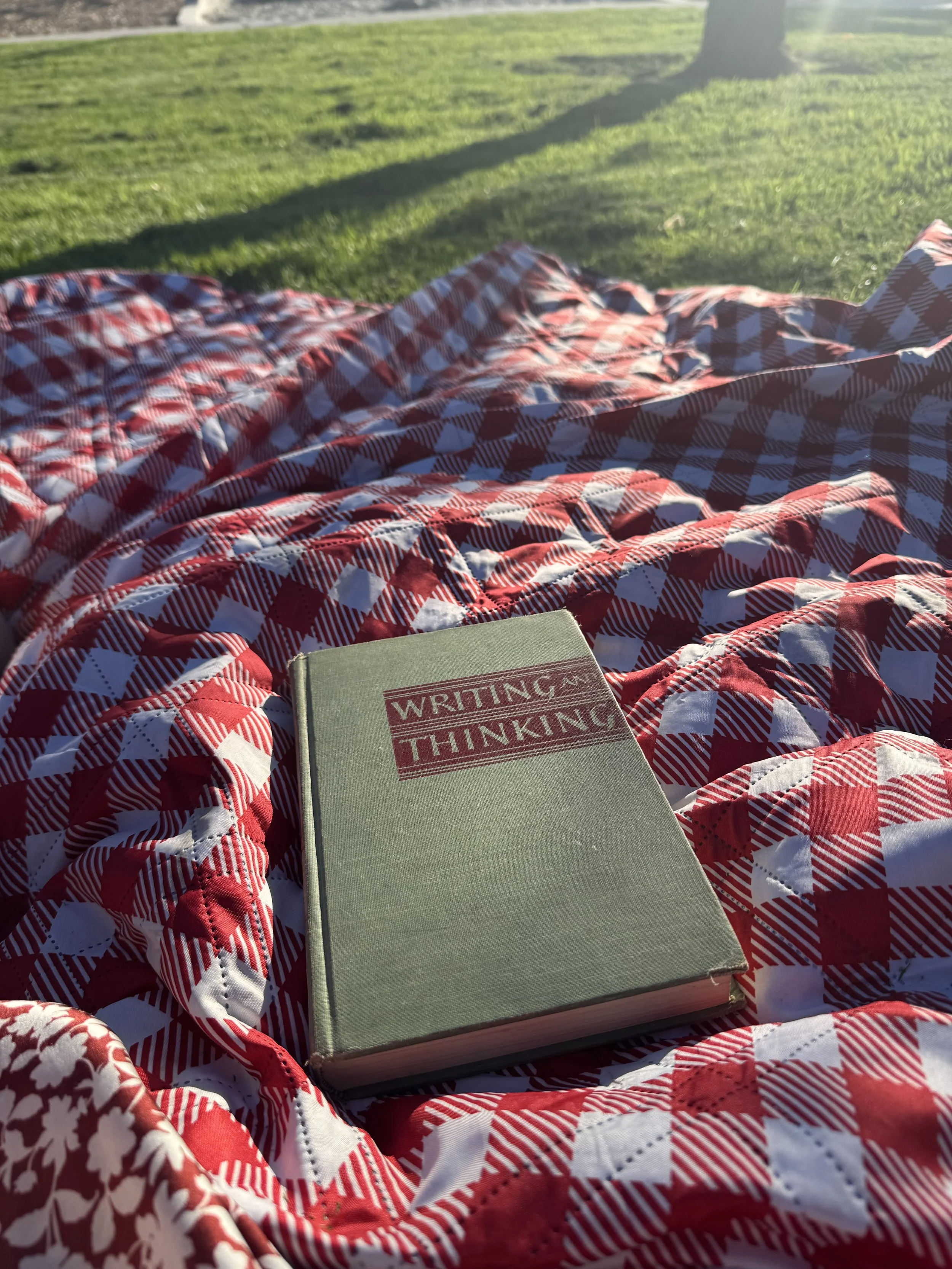
A glimpse into my summer—sitting on a picnic blanket with Writing and Thinking while my children play nearby on a jungle gym.
My writing curriculum will be based on Foerster & Steadman’s Writing and Thinking, which is probably the best book on writing that has ever been written. The goal of the writing course will be to improve the style and clarity of 5th and 6th grade students through a combination of drafting, revision, editing exercises, and analyzing great writing. This will be accomplished through a series of units I am planning now. The first unit will be an observation unit, in which students will practice noticing things from the perspective of a writer. We will read excellent descriptive passages from classic literature and mimic the style (see this incredible example), we will write descriptive paragraphs of things and people we love, and we will finish up the unit by writing a place essay, describing a place that is important to us.
Throughout the year, we will build on this descriptive ability as we write about processes, explore questions, and construct arguments. As the students complete work, I will edit it with attention and provide detailed feedback to each child. And, I will target specific writing skills with the whole class throughout the year as I notice problems that come up in their writing. In this way, I hope to create a curriculum that is both intellectually rigorous and seriously fun.
I am anticipating that students will finish various assignments at different times. I want to have things for them to do with their time if they finish early, but these things must accomplish specific criteria. First, the task must be valuable in and of itself—not “busy work.” Also, the task must be done independently, or at least mostly independently, since my attention will necessarily be focused on the students who are working on the main assignment. Finally, the extra work must be easily gradable so I can devote most of my attention to corrections on the main assignments. I am excited about the three independent activities I have come up with, and I think my students will be too.
Paragraph Editing
The first activity for early finishers will be a paragraph editing exercise. Students will be able to choose a pre-written paragraph that is filled with errors, and they will correct it. When they are done, they will have access to an answer key to check their work. Then they will turn it in so I can provide a double-check for accuracy. The paragraphs will be comedic in nature, so I expect this will be a popular choice.
Speech Analysis
I am assembling a collection of famous speeches from history and film. The students will have the choice to get one if they have extra work time so they can read it and analyze it. Analysis will involve identification of the speech’s main purpose, highlighting the three most effective sentences in conveying that purpose, and paraphrasing the chosen sentences on a separate sheet of paper. So far, I have quite an interesting collection of speeches. I have “The Gettysburg Address,” a speech from Top Gun, an excerpt from “I Have a Dream," a speech from A Man For All Seasons, and even a speech from Star Trek. I have been enjoying the assembly process. (Comment speech suggestions below!)
Notebook Prompts
Finally, and perhaps most excitingly, each student will have a composition notebook in which they can write responses to a selection of prompts. Each month, a list of prompts will be displayed in the classroom and the students can choose one to respond to if they have extra time in writing class. The only requirements for the notebook will be that the students must write neatly and take the responsibility seriously. (This does not mean they cannot be funny in their notebooks—I hope they will be funny!) I will collect the notebooks periodically and read them, adding a comment in the margins here and there, but I will not be closely editing or correcting them. My hope is that this will allow space for creativity, without constraints or stress to make it perfect. Students who fill their entire notebooks will receive fancy certificates for their achievement.
Here are some sample prompts for their notebook work:
What if pencils held grudges?
Describe the world’s worst superhero.
You discover a door in your house that wasn’t there yesterday. Write a story.
Write the most dramatic paragraph possible about losing a sock.
Design the perfect treehouse.
I have listed five here, but I have a list of about sixty prompts assembled. I think they sound fun, so hopefully my students will enjoy them.
Now, all of this is in the planning stages, and we all know what happens in this world when we make plans. “Man proposes, God disposes!” So we will see how much of this actually comes together in the way I expect once the school year begins. The most important thing will be addressing the needs of the students I have in front of me, and I will not know about those until September. But, regardless of what happens then, I am enjoying the planning now. And no matter what changes in the fall, the preparation of topics and materials will only help me as I go through the first year of teaching these courses. I look forward to documenting my progress, my course corrections, and my discoveries here.
Here’s to thinking, and the writing that helps us do it clearly!
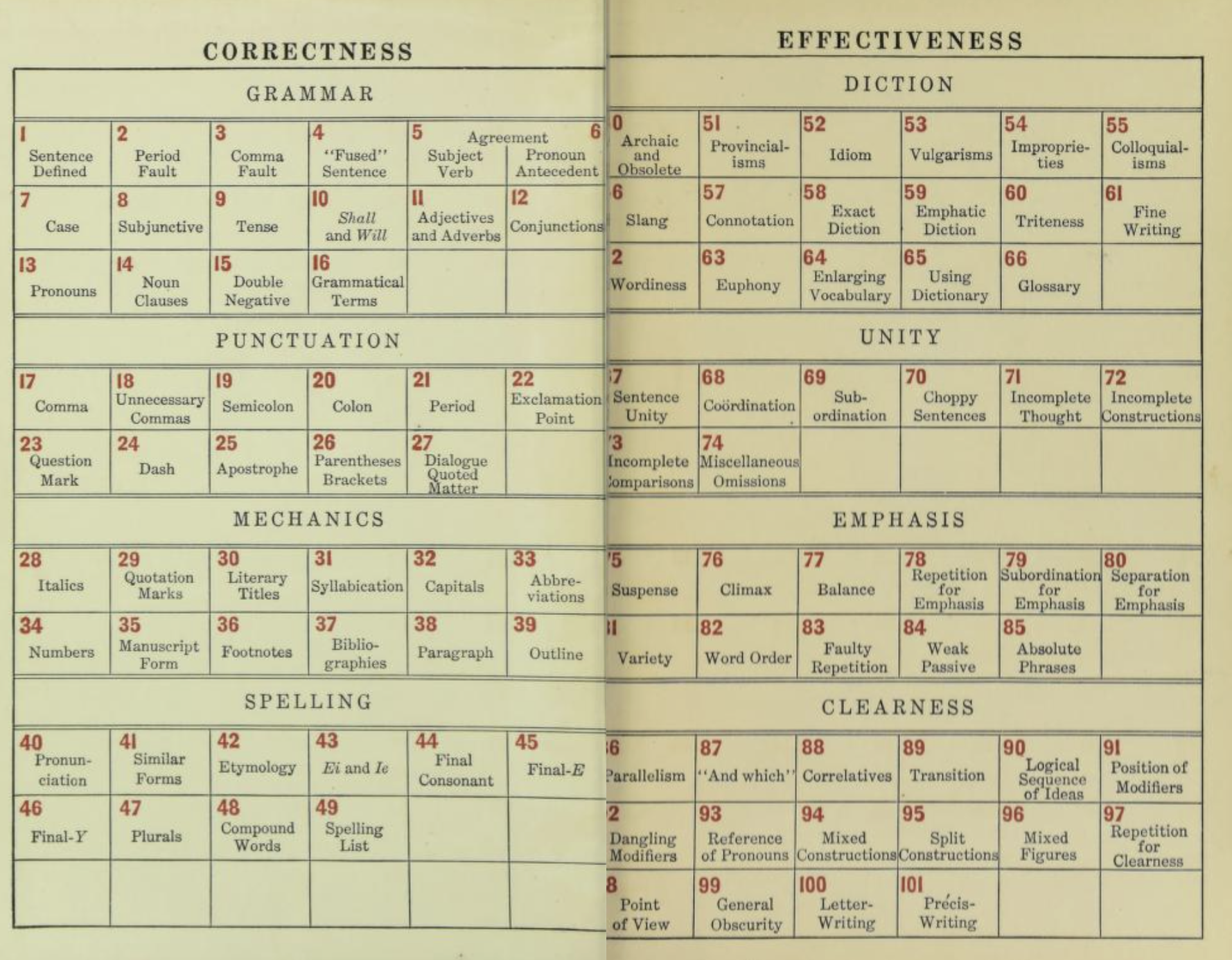
A glimpse inside of Writing and Thinking!