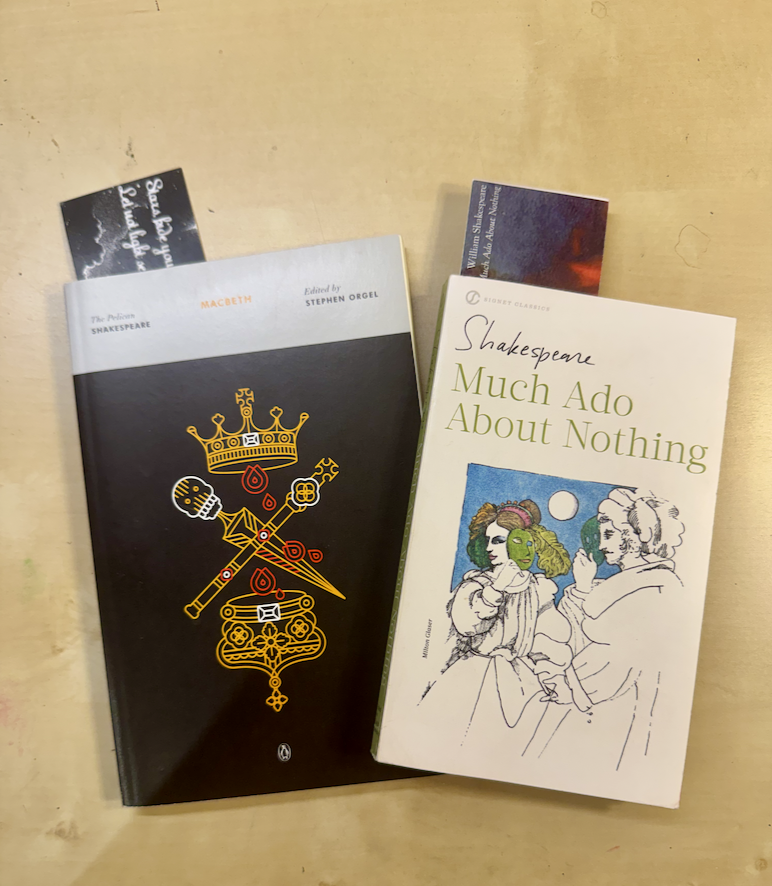
Your students are not too young for Shakespeare.
I teach Shakespeare poems to 2nd graders and unabridged plays to 5th graders. All my students, regardless of their academic backgrounds, think Shakespeare is a genius of drama and a total riot. And they are right.
Today, I want to share with you how I introduce unabridged Shakespeare plays to my students, how we read them together, and what I do to help my students see their beauty.
Summarize the Plot.
Normally I avoid spoilers like the plague, and even avoid letting my students make predictions about the parts of a plot we have not yet encountered. But with Shakespeare, it is a little bit different. I summarize the whole play without worrying about spoilers. Some tips for the summary:
Make it fun! Keep it interesting and dramatic by play acting a bit yourself while summarizing to your class.
Be detailed… But not too detailed. Highlight important things they will need to know so they recognize those things when they encounter it in the play… But try not to read excerpts or anything. This is a detailed summary, but it is also pretty quick.
Do not worry about spoilers. Tell them everything, and gush about the parts you love.
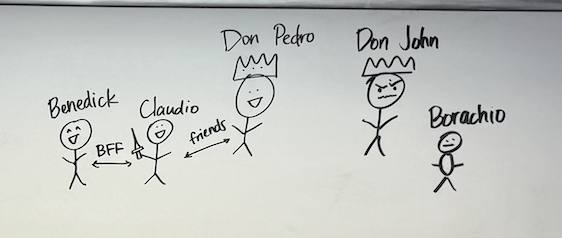
I like to make a map of characters during my full-plot summaries… I get a little silly with it, which makes it more memorable! This is just a portion of one of those silly maps. (Much Ado About Nothing, 5th grade literature)
“If it prove so, then loving goes by haps;
Some Cupid kills with arrows, some with traps.”
Summarize each scene.
That’s right! More summaries! Before beginning each scene, I tell my students what is about to happen. This allows them to engage more fully with the beautiful language. (The Folger website is a great resource for this.)
Assign parts and read!
This is the best part. I choose students to read each part and jump right into the story. I try to let them wrestle with the language a bit, help when necessary, and pause every few character lines to explain and discuss. It takes a bit of finesse to know when to stop—I don’t want to stop so often that I break up the pacing, but I also don’t want to wait so long that students get lost. I find these boundaries by running into them and noticing my students’ reactions. Then, I adjust accordingly.
Rinse and repeaT.
I only do this with a particularly funny or dramatic scene, but once my students have read through it the first time, I will re-assign parts and have them run back part of it again… But standing up in front of the class this time. Then, I’ll do the same thing again… And again! At first I was worried this would be boring, but it is actually many students’ favorite part of reading Shakespeare in my classes. With each repetition, their comprehension and enthusiasm increases. Further, they are motivated to embody the characters while giving their performance a bit of a personal twist. They love differentiating their performances from their classmates’ portrayals. Creativity comes alive when we rinse and repeat Shakespeare scenes.
Stop and luxuriate.
I usually pick three (or more) scenes from each Shakespeare play to stop and play with for a while. I have the students get into groups and rehearse the scene together, then perform it in front of the class. While they are rehearsing, I circulate around the room and give notes and suggestions. If time allows, I sometimes let each group perform their scene twice—once as a “rough draft” and then again as a “final draft” (these happen on separate days). This step goes well if each group has their own gimmick, gag, or idea that differentiates their performance from the others. This is what I help them cultivate as I circulate.
“Stars, hide your fires.
Let not light see my deep and black desires.”
Write!
My students write a lot. This is one of the essential ways they can relate to the plays. At the end of a day’s reading, I once asked “What is wrong with Lady Macbeth?” This was the day we read her “unsex me here” monologue, which is one of the first scenes in which she appears. Even after such brief exposure to her, my students wrote furiously for fifteen minutes straight, and several even asked to stay in from recess for a few minutes so they could finish writing their answers. If students are regularly getting on their feet, discussing, and reading out loud, they will naturally have a lot to say.
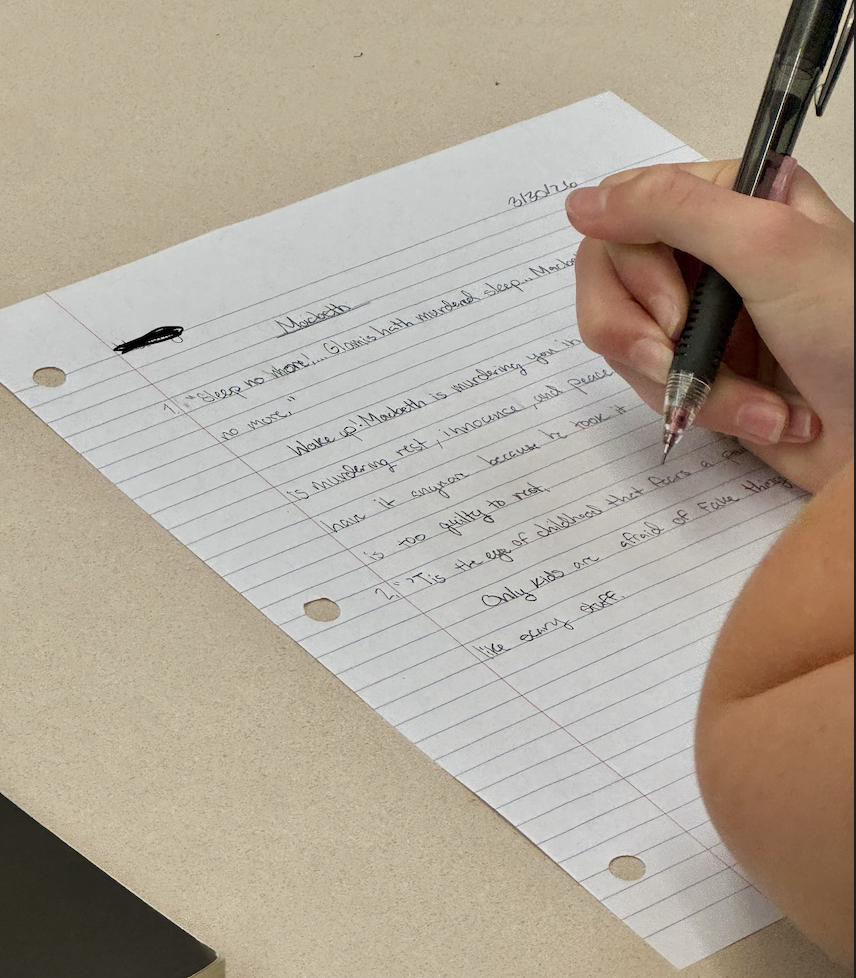
Another great assignment is paraphrasing. My 6th grade students recently paraphrased three lines from a scene that I copied down on the board, and I loved seeing what they wrote. They asked great questions about the meanings of words, and the implications of metaphors.
For example, I wrote this quote on the board, and my students re-wrote it in their own words:
Lady Macbeth: “‘Tis the eye of childhood that fears a painted devil.”
Student: “You are afraid of a mere picture, which makes you no better than a child.”
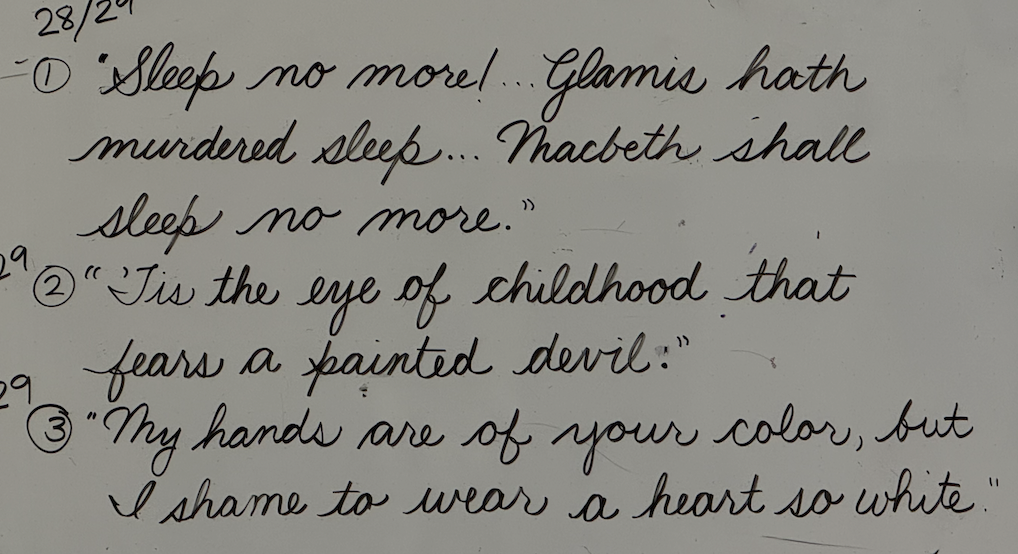
This was the full assignment that day. I wrote these quotes from Macbeth on the board, and my 6th graders paraphrased each of them. Paraphrasing complex language is such a valuable exercise in comprehension, expression, and appreciation.
Let enthusiasm show.
Sometimes when we see someone get excited about something, we can feel ourselves wondering what all the fuss is about. That is exactly what I want my students to wonder. I only teach my students the Shakespeare plays I love the most, NOT the ones I feel like they “should” read. I think it is important to have a genuine love of the material I teach so I can model that love for my students. I regularly cry, laugh, and slap tables in front of my students as we read. It surprises them at first but eventually they realize it is just part of the Mrs. Steele package, and most of them end up crying with me at some point.
It does not take a gifted child to read and enjoy Shakespeare. Like most things in life that are worth having, enjoyment of Shakespeare is attainable for anybody who is willing to put in the work. Young students should not be steered away from the beauty of Shakespeare. Rather, they should be led into it by an enthusiastic guide who delights in witnessing their discovery.